A bell-shaped pot beside an archer’s grave goods is the typical sign of the bell beaker culture: a Europe-wide package of pottery, archery gear and metal objects whose carriers differed genetically between Iberia and Central Europe.
For where this package sits among other periods and cultures, see the prehistoric Europe timeline. The sections below separate what the evidence supports from the common shortcuts, such as treating Beakers as a single people or as only a pot style.
A package of objects, not one people
The Beaker Complex is described in a review of the ancient DNA evidence as characterised by single inhumation burials, Continental-style archery equipment and objects of gold and copper. The pottery is only one part of that set. A bell-shaped vessel found without burial, weapon or metal context is a weaker marker than the same vessel in a grave with archery gear and a metal object.
The same review notes that the complex is often viewed as having originated in Iberia around 2750 BC. It reached Britain from around 2450 BC. Treat those two dates as regional starting points, not as a single start date for the whole of Europe.
| Common assumption | What the evidence shows | Why it matters |
|---|---|---|
| Bell Beakers are just a pottery style | The complex combines single inhumation burials, archery equipment and gold and copper objects | Judge a site by its burial and metalwork as well as its pots |
| Bell Beaker is the same as Corded Ware | It can be seen initially as the western equivalent of the contemporary Corded Ware culture | Treat the two as parallel phenomena, not one culture |
| It appeared everywhere at once | Often viewed as originating in Iberia around 2750 BC and arriving in Britain from around 2450 BC | Date Beaker material region by region |
| Beaker users shared one ancestry | Iberian groups had mostly local Neolithic ancestry, while those in Central Europe had a quite different genetic profile | Regional ancestry cannot be assumed from the artefacts |
The package description and the ancestry contrast come from the ancient DNA review, and the Corded Ware comparison from a summary of Beaker groups in Britain and Ireland.
Bell Beaker pottery and typical forms
Bell Beaker pottery is defined by vessels shaped like a reversed bell, according to the Beaker summary. Decoration is usually arranged in bands filled with impressions made with a comb or cord, which gives the pots their banded look.
The main international decoration styles are All Over Ornamented, All Over Corded and Maritime. A practical test for a museum case is the profile first, then the banding: a reversed-bell outline with impressed bands points to the Beaker tradition, while the style name tells you which decorative scheme the maker followed.
Grave goods and burial customs
Burial is where the Beaker package is easiest to recognise. The elements that recur in the evidence are listed below.
- Single inhumation: the dead were buried as individuals rather than in collective tombs, as the genetics review describes the complex.
- Archery equipment: the same source calls it Continental-style, which links graves across regions.
- Copper dagger: Beaker individuals used copper daggers instead of battle-axes, according to the Beaker summary, which makes the metal blade a useful contrast with neighbouring traditions.
- Gold and copper objects: metalwork forms part of the definition of the complex, not an optional extra.
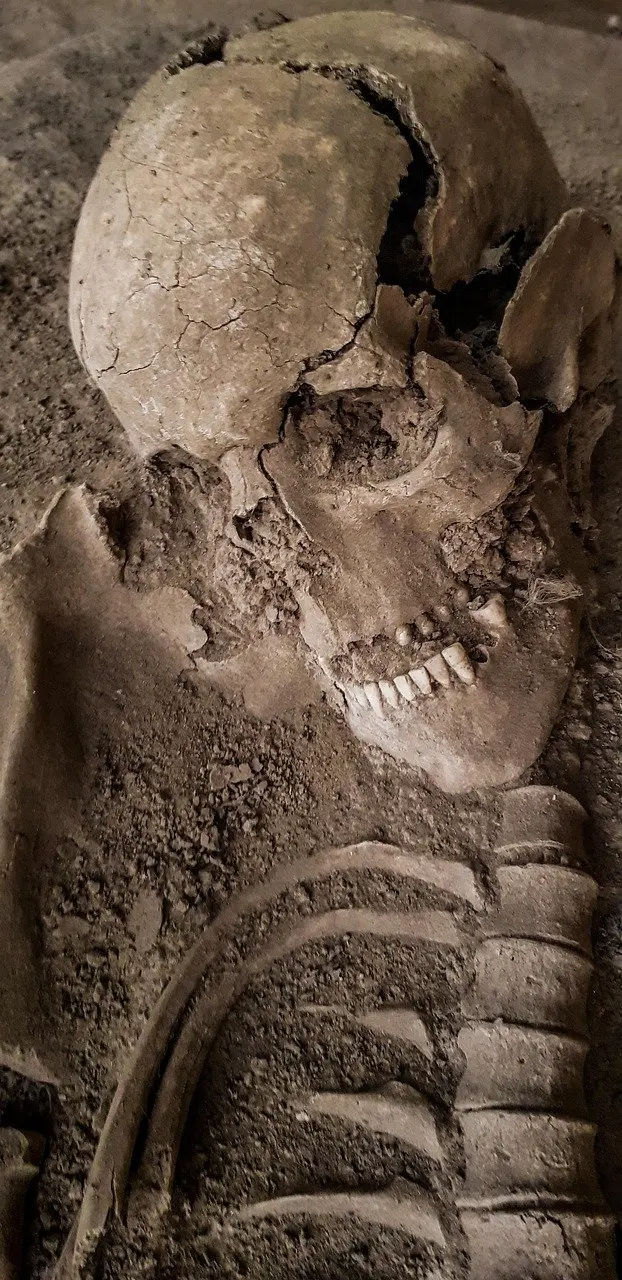
Reading a grave this way has a limit. A single object type does not make a burial Beaker. The strongest identification comes from several elements together: one body, archery gear, metalwork and a beaker.
The Amesbury Archer
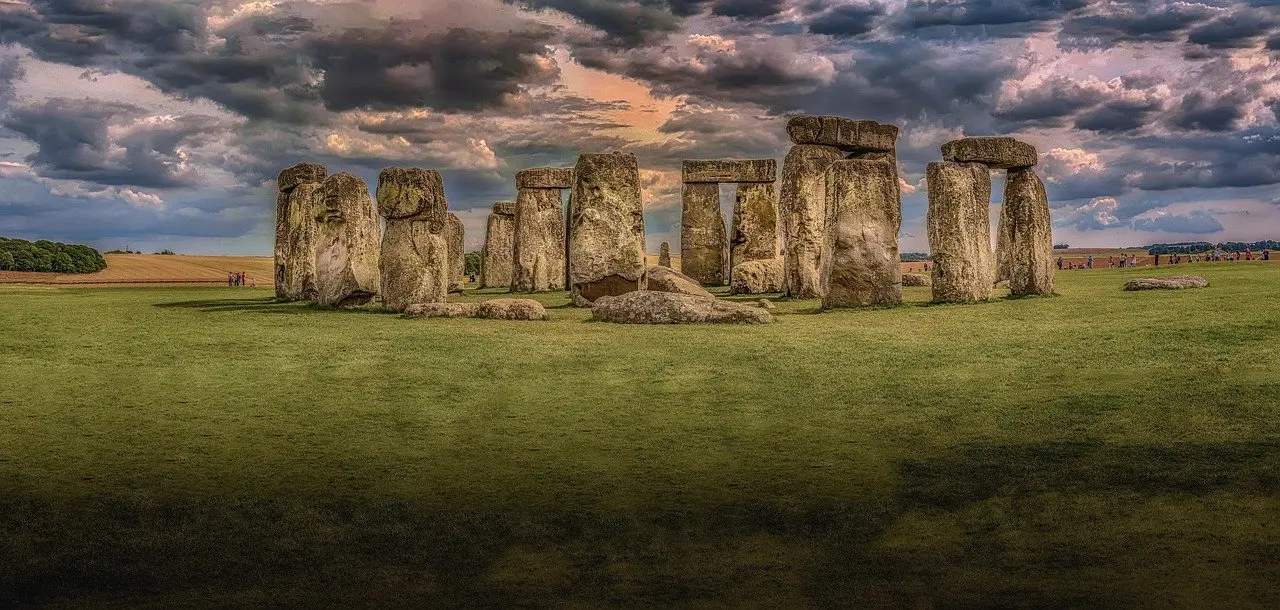
The Amesbury Archer is the best-known Beaker burial in Britain. He was buried about 2300 BC, three miles from Stonehenge, as described in an article on the migration debate.
His grave is useful because it fits the archer-burial pattern while sitting in the Wessex landscape around Stonehenge. The same article notes that the British burial sample used in DNA studies is heavily drawn from regions where Beaker inhumations are especially visible and well excavated. Archer burials of this kind are therefore the most visible Beaker evidence in Britain, and that visibility should not be mistaken for typicality.
Where the Bell Beaker culture spread
Bell Beaker material runs from Iberia in the south-west to Britain in the north-west. Its eastern spread is documented as far as Poland, and the Beaker summary adds a southern move that led to enclaves in the south-western Mediterranean. The pattern is a set of linked regions, not a single continuous territory.
The eastern end is where the comparison with Corded Ware becomes concrete. As far east as Poland, the same summary records a sequence from Corded Ware to Bell Beaker. For the other half of that relationship, read the guide to the corded ware culture.
The Beaker metal objects also tie this culture to its wider setting in copper age europe, where gold and copper working shaped the grave goods that archaeologists now use to recognise the complex.
Migration, DNA and what it shows
Ancient DNA shows that the answer depends on the region. People moved into Britain in large numbers, while the Iberian Beaker groups were mostly of local Neolithic ancestry. The review cited here describes two hypotheses for the Beaker spread, called Beaker Colonisation and Steppe Drift.
The Olalde et al. 2018 results for Britain
The review of the 2018 study reports a sample of 400 individuals, including 226 associated with distinctive artefacts of the Beaker Complex. The British findings are stark.
- Before Beakers: Neolithic individuals from Britain (51 of them) lack any trace of Continental or steppe ancestry.
- With Beakers: all 37 individuals associated with Beaker Complex artefacts carry large amounts of steppe ancestry.
- Male line: more than 90% of Beaker Complex and later male individuals share the same Y-chromosome haplogroup.
- Overall change: the genome-wide analysis shows a replacement of 93% of the gene pool in Britain.
- Women: mitochondrial haplogroups not previously present in Britain show that women also moved in substantial numbers at this time.

Limits of the British figure
Critics quoted in the migration debate article point out that just 37 of the 400 skeletons came from burials in Britain. They also argue that the sample leans toward well-excavated regions where Beaker inhumations are most visible. Julian Thomas is cited there for the view that DNA-based models of swift and comprehensive population change sometimes conflict with other aspects of the evidence.
The sound reading is to accept the ancestry turnover in the British genomes as a strong result while treating the exact percentage as a sample-based estimate. Pottery and grave goods can move without people in Iberia, whereas in Britain the genetic evidence points to substantial movement alongside the Beaker package. Neither case supports a single explanation for all of Europe.
Frequently asked questions
| Question | Answer |
|---|---|
| Did Bell Beaker people drink from their beakers? | Beer and mead content have been identified from certain examples, and some beakers were used as funerary urns, according to the Beaker summary. Function therefore varied by vessel. |
| Did only men move into Britain? | No. Mitochondrial haplogroups not previously present in Britain show that women also moved in substantial numbers, as the genetics review reports. |
| What was found at Ewanrigg? | Two Beaker bodies were found in a gravelly mound, with 26 cremated individuals nearby. Carbon dating places the cremations in roughly the same period, 2460-1520 BC, according to the migration debate article. |
| Where do the earliest Maritime-style beakers come from? | The earliest Maritime style is located in the Tagus estuary of Portugal around 2800–2700 BC, according to the Beaker summary. |