
Quick answer: for how to take notes at a lecture archaeology students can rely on, use a Cornell-style layout, write down what is not on the slides, and review with self-testing instead of rereading. The method suits you if you need recall, not a transcript.
The techniques below follow the order of a lecture, not a ranking, and each is adapted to periods, site names and drawings. For talks to practise on, see our guide to archaeology lectures online. For what to do before you sit down, read how to attend an archaeology lecture. Public talks listed under tag der archäologie vorträge also give you a chance to try your shorthand before a graded course.
How the techniques were chosen
A useful technique has to cope with that load. Four criteria decide which ideas are included.
- Captures what slides miss. Notes should add the lecturer’s reasoning, not copy the slide text.
- Works at lecture speed. Names and date ranges arrive faster than anyone can spell them out, so the method must survive gaps.
- Handles drawings. Plans, profiles and sections need a visual place in the notes, not only words.
- Supports self-testing. A note page earns its place when you can turn it into questions you could be asked.
No technique outranks the others. They work as a sequence: prepare, structure the page, mark as you go, draw, then review. A student who adopts only the Cornell layout and the review habit already covers most of the value.
Note-taking techniques for archaeology lectures
Prepare with expected questions
Skim the slides or the reading before the lecture and write three expected questions, about ten minutes beforehand, as advised in a lecture note-taking guide. For an archaeology lecture, good questions are concrete: which period does the speaker place this site in, what evidence is offered, and what does the lecturer conclude from it?
This suits anyone who feels lost in the first few minutes of a lecture on an unfamiliar culture. It does not suit a lecture with no advance material, so in that case skip it and begin with the page layout below.
Cornell note-taking method
The Cornell note-taking method is the layout the same guide singles out as built around self-testing. The page is divided with two ruled lines, and the point of the layout is the self-testing pass you do afterwards. It suits archaeology well because the content falls into natural blocks: a site, a phase, a find type, an interpretation. Each block can later become a question.
Its limit is the effort it demands after the lecture. If you never complete the self-testing pass, you have only a tidy page. Choose a simpler format if you know you will not return to the notes.
Write what the lecture handout leaves out
Aim to write down the things that will not be on the slides, and do not try for a transcript. A lecture handout already holds the headings, the dates and the figure captions. Your notes should hold the lecturer’s argument: why a site is dated the way it is, what a pattern of finds suggests, and which interpretation the speaker doubts.
This works best when you have the handout in advance and can annotate around it. It works less well when no handout exists, because you then have to record a basic outline as well. Even then, prefer short phrases over full sentences.
Shorthand marks for dates, periods and site names
Four consistent marks keep the page readable at speed: ? for “I did not follow this”, !! for “they said this matters”, [ ] for “check this reading” and → for “follows from”. These come from the same lecture note-taking guide.
In an archaeology lecture, the square brackets earn their keep on proper names. Put a half-heard site name or a period label inside [ ] and write it as it sounded. Check the spelling against the handout or reading afterwards. Use → for sequences, such as one phase leading into the next. Use !! when the lecturer signals that a date range or a site is examinable.

Pick the marks once and keep them for the whole course. A mark that changes meaning between lectures causes more confusion than having no marks.
Leave a marked gap when the speaker moves too fast
When the lecturer races through a list of sites or phases, leave a gap where you lost the thread rather than trying to catch up. Mark the gap with ? or [ ] so you can find it later. This keeps you listening to the next point instead of falling further behind on the last one.
Fill the gap during the review pass, from the handout, the reading or a classmate’s question. Gaps work better than guesses because a wrong date in your notes looks as confident as a right one.
Sketch plans, sections and finds
Words alone describe spatial material badly. When a slide shows a site plan, a trench section or a pottery profile, draw a rough version and label only the parts the lecturer talks about. A small labelled sketch with an arrow to the point being made is more useful than a paragraph describing the same layout.
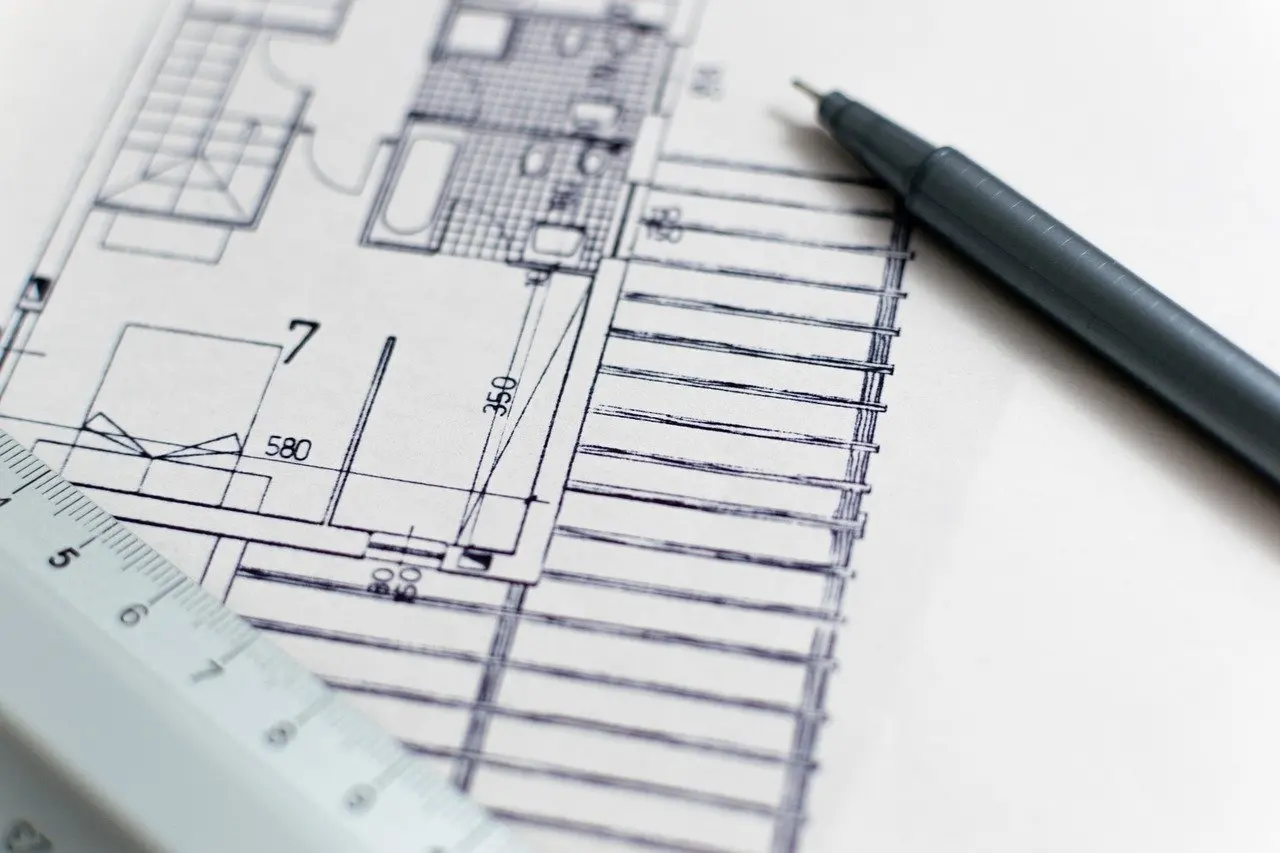
Leave blank space beside text blocks so a sketch can sit next to the explanation it belongs to. This suits visual learners and anyone studying excavation methods. It is slow if you try for neatness, so accept rough lines and tidy them only if the page is still readable at review.
Paper or laptop
Either works if you summarise instead of transcribing. The note-taking guide explains the logic: writing by hand makes you summarise because you cannot keep up, and summarising is the part that works. Typing is fine if you summarise deliberately, in the guide’s words: do it deliberately and the keyboard is fine.

For archaeology, the practical split follows the content. Paper is easier when a lecture is full of sketches, plans and arrows. A laptop is easier when you want to search names later or paste a handout into your document and annotate around it. If you type, set a rule for yourself to write phrases, not sentences, and draw diagrams on paper beside the keyboard.
The pack offers no named studies comparing handwritten and typed notes, so treat the summarising argument as the reasoning behind the choice, not as a measured result.
Reviewing notes afterwards
The twenty-minute pass
Do a review pass of about twenty minutes within a day of the lecture. The same lecture note-taking guide advises turning each block into a question you could be asked. For archaeology notes, that means questions such as what a site is known for, how a period is distinguished from the one before, and what a drawing shows.
Use this pass to resolve every ?, [ ] and marked gap while your memory can still fill them. Then cover the notes and answer your questions out loud or on paper.

Flashcards for terms, periods and sites
Flashcards turn the review questions into something portable. Put a question on one side, such as a site name, a period label or a find type, and the answer from your notes on the other. They suit the naming-heavy parts of archaeology, where recall of a label is the skill being tested.
Flashcards are weaker for sequences and spatial relationships, so keep those in the sketches and in your Cornell page. Do not rely on rereading either. The guide notes that rereading feels productive because familiarity is easy to mistake for recall, while answering your own questions tests what you actually know.
Technique comparison
| Technique | Best for in archaeology | Limit | Planning use |
|---|---|---|---|
| Three expected questions | Entering a lecture on an unfamiliar period or site with a point to listen for | Needs slides or a reading beforehand, about ten minutes | Do it just before the lecture starts |
| Cornell layout | Blocks of content that become review questions | Only pays off if you complete the self-testing pass | Default page layout for most lectures |
| Writing what is not on the slides | Capturing the lecturer’s argument and caveats | Less effective without a handout to build on | Collect the handout first and annotate around it |
| Four shorthand marks | Unclear names, key points and sequences | Must stay consistent across the course | Fix the marks once, then keep them |
| Marked gaps | Fast lists of sites or phases | Gaps must be filled promptly | Resolve them in the review pass |
| Sketches | Plans, sections and pottery profiles | Slow if you aim for neatness | Leave space beside the text on each page |
| Twenty-minute review with flashcards | Terms, periods and site names | Weaker for spatial relationships | Schedule it within a day of the lecture |
The timings and mark meanings in this table come from a student-focused lecture note-taking guide, with the archaeology adaptations being practical judgement.
Frequently asked questions
Can a recording replace taking notes?
No. A recording is useful for filling a gap at a specific timestamp, but it becomes a trap if it turns into a reason not to listen, according to the note-taking guide. Check your institution’s rules on recording before you start.
What should I do after missing a lecture?
Get the slides and write your own questions against them before borrowing anyone’s notes. Reading someone else’s notes produces recognition rather than recall, so your own questions come first, as the same guide explains.
Why does review timing matter?
Memory can still fill the gaps within a day. Leave it a week and the notes are no longer fixable, so unresolved site names and dates stay unresolved, according to the lecture note-taking guide.