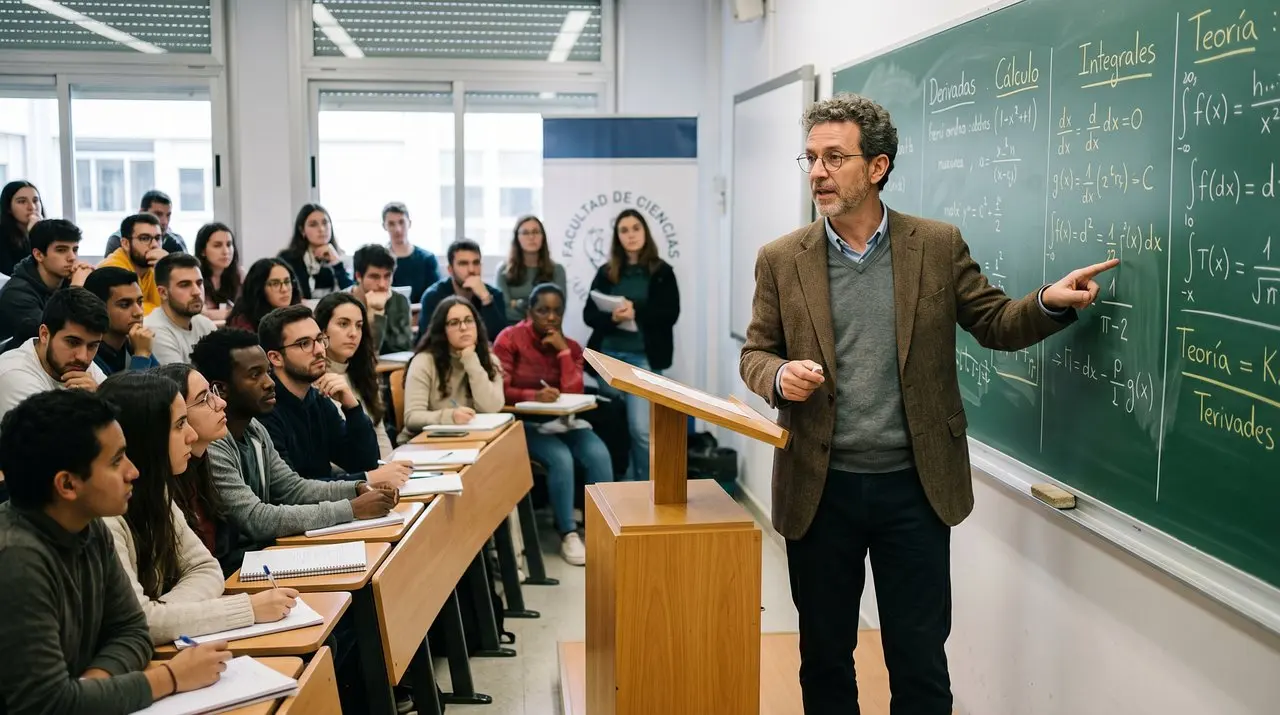
Looking for archaeology lectures germany usually starts with a university institute’s event page. Check there first, then widen to other hosts, and search in German with terms such as Vortragsreihe and Termine.
Talks that are streamed rather than given in a lecture room are covered in the guide to archaeology lectures online. A separate list of online archaeology lectures gathers the remote options. The rest of this guide deals with talks you attend in person, and with the questions that most often stop people from finding them.
Start with university institute event pages
A university archaeology department is the most reliable host to check first, because its event page lists talks as they are scheduled. Public archaeology talks also appear on the pages of neighbouring disciplines, so ancient history and classical studies pages belong in the search.
The University of Freiburg’s ancient history department states that it regularly organises colloquia and invites renowned scholars from Germany and abroad. Its classical studies colloquium also carries an archaeology-focused talk. That talk, “Vom Nutzen archäologischer Universitätssammlungen heute”, is given by a speaker from Göttingen on 25.11.26. Archaeological content can therefore sit inside a broader classics or ancient history programme rather than under an archaeology heading.
A second model is a department that runs a named colloquium. Basel’s ancient history department, a Swiss university whose listings use the same German vocabulary, runs the research colloquium “News from Ancient History”. The department organises it, and staff, doctoral students and invited external scholars present. Check the organiser line on an event page. It tells you whether a department, a research group or an outside body is responsible, and where to find updates.
Beyond universities, museum event calendars, state archaeological heritage office websites and regional archaeological societies are worth adding to your routine. Each publishes in its own format, so a quick look at the programme page of each one in your region is faster than waiting for a single national listing to appear. Once you know where to look, the next obstacle is vocabulary.
German search terms and what they mean
German listings use a small, repeatable set of words, and recognising them turns a blank search into a useful one. Searching “Archäologie Vortragsreihe” finds series of talks. Searching “archäologischer Vortrag Termine” finds individual talks with their dates.
| German term | Meaning | Planning use |
|---|---|---|
| Vortragsreihe | Lecture series | Use it to find a whole programme at once. A series page often lists every talk in a term. |
| Termine | Dates, appointments | Add it to a search or click it on a menu to reach the date list. |
| Vortrag | Talk, lecture | Use it for single events. Listings tag these as “Guest lecture / Talk”. |
| Vortrag von … | Talk by … (speaker named next) | Read the name and the affiliation in brackets to judge whether the speaker works in your period or region. |
| Kolloquium | Colloquium, a research-focused talk series | Expect specialist content. Basel files these under its “Colloquium” tag. |
| Öffentliche Veranstaltung | Public event | Basel’s English listing tags events as “Public event”. Look for the equivalent tag in German. |
The terms in this table come from the announcements and tags on the Basel research events page and the Freiburg events page.
One quirk saves time. German announcements put the speaker after “Vortrag von” and then give the host series, for instance “im Rahmen des Kolloquiums”. Reading that phrase tells you who is speaking and which series the talk belongs to.
German or English: what to expect
Listings in Germany mix both languages, so a German-only search misses some talks. Freiburg’s events page shows titles in German and in English, for example “Syracusan Colonization: From Archaic Foundation to the First Punic War” next to German-titled talks. Search in both languages.
A title language does not settle the spoken language. A talk with an English title may still be delivered in German, and the reverse is possible. If you need a particular language, read the event description or contact the organising department before you travel.
Attending as a non-student
Yes, outside visitors can attend many university talks, but the answer depends on the series. Freiburg’s ancient history page says its colloquia are open to scholars from all disciplines and to other interested attendees. That wording covers enthusiasts as well as enrolled students.
Specialist colloquia are written for researchers, so a general reader should expect technical argument. If you want an easier entry, pick talks tagged as public events or guest lectures, which is how Basel marks them. Treat the invitation on a given series page as the rule for that series, not for every institute.
Timing: terms and dates
University talks follow the academic calendar, so the winter term (Wintersemester) and summer term (Sommersemester) set when programmes run. Check the university’s own term date page for exact dates, since each institution publishes its own.

The supported examples cluster in the autumn and winter months. Basel’s colloquium series is labelled HS 2026 and lists talks on 03 Nov 2026, then 10 Nov, 01 Dec, 08 Dec and 15 Dec 2026, as shown on the Basel events page. The practical lesson is to check a series page each term. Talks can sit on a weekly or fortnightly rhythm with gaps, so a missed date may not repeat for several weeks.
When listings are hard to find or confusing
Most failed searches come down to a few causes, and each has a direct fix.

- Search results show only old events. Go straight to the department’s events or colloquium page instead of relying on a search engine.
- The talk is not under archaeology. Look at ancient history, classical studies and neighbouring institutes. The archaeology-focused talk in Freiburg appears in a classical studies colloquium.
- The title is in the wrong language. Repeat the search with the German term (Vortrag, Vortragsreihe) and with the English equivalent.
- The date is unclear. Open the individual event entry rather than the series overview. It gives the date, the venue and the organiser together.
- You need proof of attendance. Freiburg tells degree students that it can supply proof of attendance for colloquia needed for a degree programme. Ask the organising department before the talk.

If you are preparing to speak rather than to listen, the guide on how to give an archaeology presentation covers the delivery side.
Frequently asked questions
| Question | Answer |
|---|---|
| What details does a typical listing give? | Time, room and organiser. Basel’s colloquium page gives 18:15-20:00 in Kollegienhaus, Hörsaal 116. Freiburg gives 6:00 p.m. (c.t.) in Room HS 1015. |
| Who is invited to speak? | Basel’s colloquium has staff and doctoral students, and also invites well-known or as yet unknown ancient historians from outside. Freiburg invites scholars from Germany and abroad. |
| Are talks only about archaeology in the narrow sense? | No. Archaeology talks often sit within ancient history or classical studies programmes, so a broader search catches more of them. |
| Can attendance be certified? | For degree programmes, Freiburg says proof of attendance at colloquium lectures can be requested. Ask the organising department in advance. |